AI Voice-Clone Scam Calls: How to Spot Them and Protect Your Family
Your phone rings. It’s your son, your mother or your best friend. They’re crying, they’ve been in an accident or arrested, and they need money right now. The voice is exactly theirs. But it might not be them at all.
AI voice cloning has made one of the oldest scams, the “family emergency” call, far more convincing. This guide explains how these calls work, the red flags to listen for, and a simple plan your whole family can use so nobody gets tricked.
Short answer: Don’t trust a voice alone. If a call asks for urgent money or secrecy, hang up and call the person back on the number already saved in your phone. Set a family safe word that only you know, and never pay with gift cards, crypto or transfers to strangers.
How an AI voice-clone scam works
Scammers take a short clip of someone’s voice, usually from a public video, a reel, a voice note or a voicemail greeting. They feed it into a voice-cloning tool, which can then say anything they type in that person’s voice. The US Federal Trade Commission warns that a short audio clip is all a scammer needs.
Then comes the call. The story is almost always an emergency: a car crash, an arrest, a kidnapping, or being stuck abroad without a phone. Often a second person, a “lawyer”, “police officer” or “doctor”, takes over and explains where to send the money.
How big is the problem?
- Just seconds of audio: McAfee researchers found that about three seconds of audio was enough for a free tool to create an 85% voice match.
- 1 in 4 people affected: In McAfee’s survey of 7,054 adults across seven countries, a quarter had experienced an AI voice scam or knew someone who had, and 77% of those targeted directly lost money. In India the figure was 47%, almost double the global average.
- Hundreds of millions lost: The FBI says Americans lost more than $893 million to AI-related scams in 2025.
- Pakistan too: Pakistan’s National Assembly Speaker told the house that fraudsters had cloned his voice to demand money from someone. The National Cyber Crime Investigation Agency (NCCIA) received over 150,000 complaints in 2025, including about 81,000 linked to financial fraud.
6 red flags to listen for
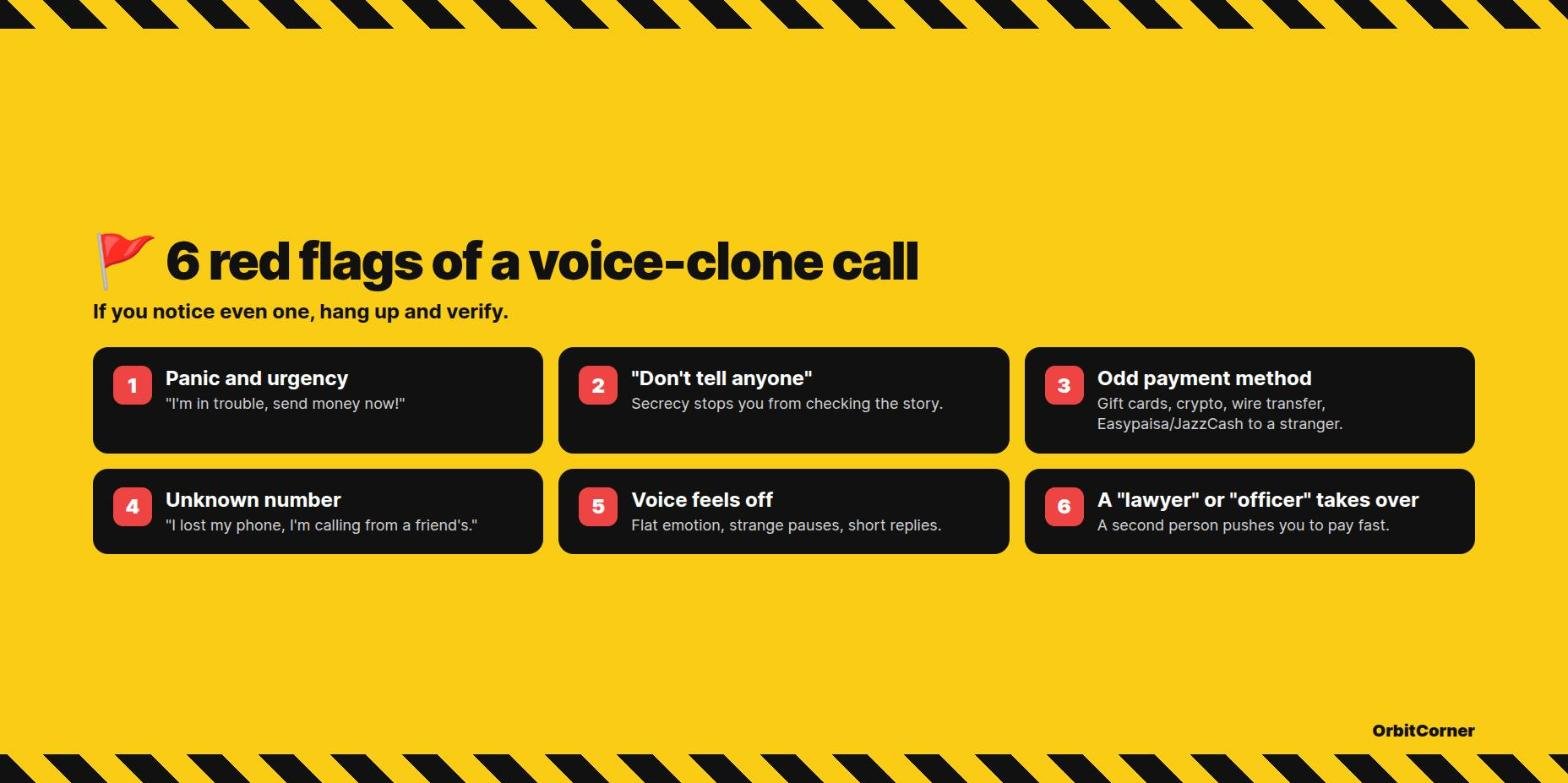
- Panic and urgency. The caller wants you to act before you can think.
- “Don’t tell anyone.” Asking for secrecy is how scammers stop you from checking.
- A strange way to pay. Gift cards, cryptocurrency, wire transfers, or sending money by Easypaisa, JazzCash, UPI or Zelle to an account you don’t know.
- An unknown number. “I lost my phone, I’m calling from a friend’s.”
- The voice feels slightly off. Flat emotion, odd pauses, short answers, or avoiding your questions. Modern clones can be very good, so don’t rely on this one alone.
- Someone else takes over. A “lawyer” or “officer” joins the call to push you into paying fast.
What to do if you get the call
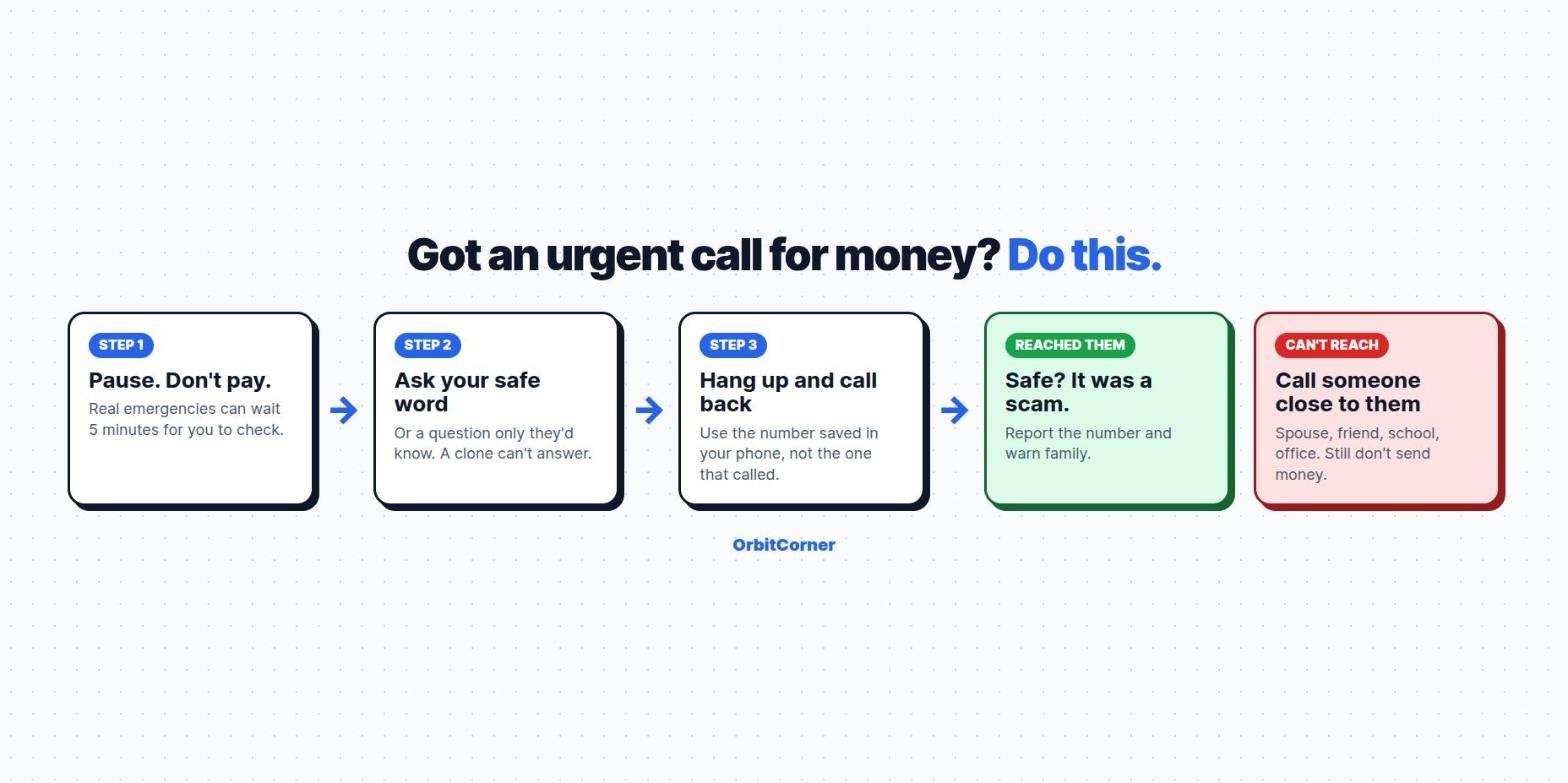
- Pause. Don’t send money or share any codes, PINs or OTPs during the call.
- Ask your safe word, or a question only the real person would know, like the name of their first teacher. Avoid anything that’s on their social media.
- Hang up and call them back on the number already saved in your phone. Don’t use the number that called you, and don’t call back on a number the caller gives you.
- Can’t reach them? Call someone who would know: their spouse, roommate, school or office. Still don’t send money until you’ve confirmed the story.
- Confirmed it’s fake? Block the number, report it, and warn your family group chat. Scammers often try several relatives.
Set a family safe word tonight
The single best protection is a code word that only your family knows. A clone can copy a voice, but it can’t guess a secret. Both the FTC and security researchers recommend this.
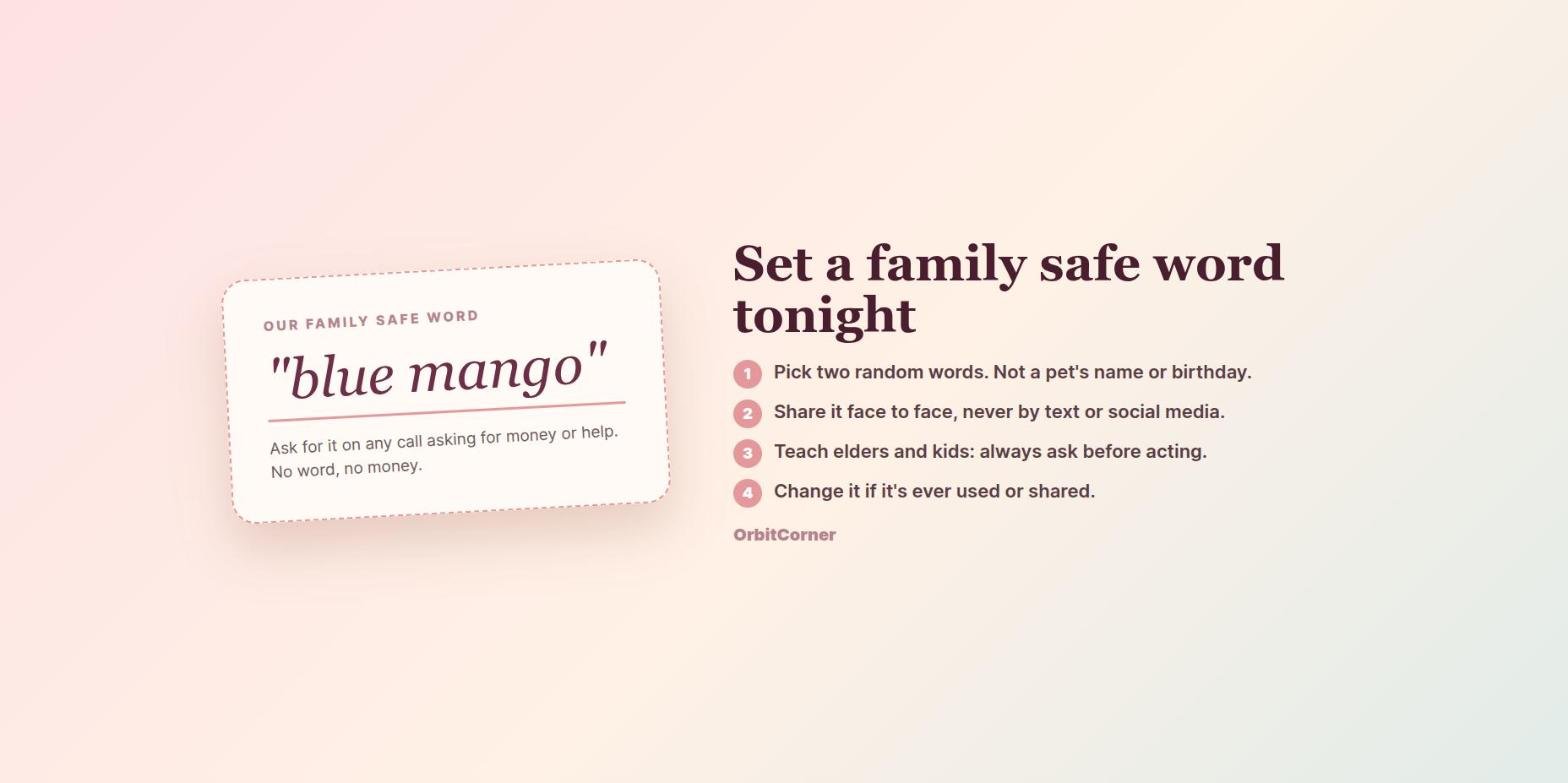
- Pick two random words that aren’t a pet’s name, birthday or anything on social media.
- Share it in person, not in a text or chat that could be hacked.
- Make sure grandparents and children know it. Older relatives are the most common targets.
- Agree on the rule: no safe word, no money, no matter how real the voice sounds.
- Change it if it’s ever used or shared.
Make your own voice harder to clone
- Lock down social media. Set personal accounts to private, especially ones with videos or voice notes of you or your kids.
- Use a generic voicemail greeting, or your carrier’s default, instead of recording your own voice.
- Be careful with unknown callers. Let unknown numbers go to voicemail, and don’t chat at length with random “survey” or “wrong number” calls.
- Turn on two-factor authentication for WhatsApp, email and banking, so a scammer can’t take over your accounts and message your contacts as you.
Already sent money? Act fast
Call your bank or wallet provider straight away, using the number on their official app or card. Payments can sometimes be stopped if you report them quickly. Then report the scam:
| Where you live | Where to report |
|---|---|
| 🇺🇸 United States | FTC at reportfraud.ftc.gov and the FBI at ic3.gov |
| 🇵🇰 Pakistan | National Cyber Crime Investigation Agency (NCCIA), plus your bank, Easypaisa or JazzCash helpline |
| 🇮🇳 India | Cybercrime helpline 1930 or cybercrime.gov.in |
| 🌍 Anywhere else | Your national fraud reporting service and local police |
Quick answers
Can AI really copy my voice from a short video?
Yes. Researchers have produced convincing clones from just a few seconds of clear audio, and the tools are cheap and easy to use.
Can scammers also fake the caller ID?
Yes. Caller ID can be spoofed, so a call can even appear to come from a family member’s real number. That’s why you should hang up and call back yourself.
Do the same scams happen on WhatsApp voice notes?
Yes. Cloned voice notes are common, often sent from a hacked or new account. The same rule applies: verify on a separate call before sending anything.
Is there an app that detects voice clones?
Some phones and security apps now flag suspected scam calls, which helps. But no detector is perfect, so a safe word and a call-back are still the most reliable checks.
Share this with your family
The people most likely to get this call are parents and grandparents. Send them this guide and agree on your safe word today. Then explore our free everyday tools.